Six prediction markets ordered to halt sports event contracts in Missouri
Missouri Attorney General Catherine Hanaway announced on September 18, 2026, that her office had ordered Polymarket, Kalshi, Crypto.com, Novig, Underdog and Robinhood to stop offering sports event contracts to Missourians, giving each company 30 days to confirm compliance with the state's sports wagering law or cessation of the activity.
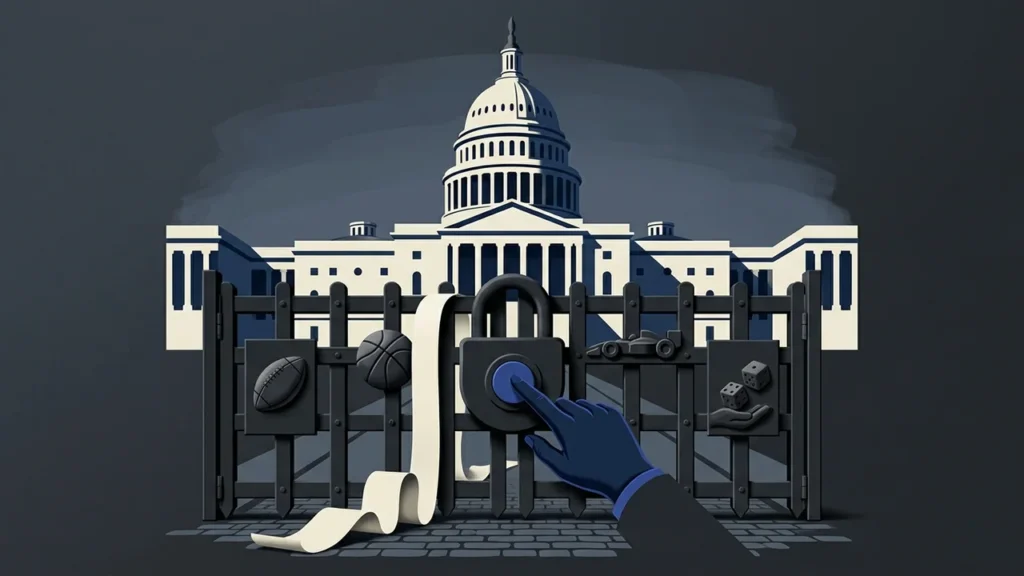
Missouri Attorney General Catherine Hanaway announced on September 18, 2026, that her office had sent cease-and-desist letters to six prediction-market operators — Polymarket, Kalshi, Crypto.com, Novig, Underdog and Robinhood — asserting that offering sports “event contracts” to Missourians constitutes unlicensed sports wagering under Missouri law.
The letters to Kalshi, Polymarket, Crypto.com and Robinhood are dated September 16, and the letters to Novig and Underdog are dated September 17. Each asks the company to confirm its compliance, or its cessation of Missouri sports wagering activity, within 30 days of the letter’s date and warns that the state will otherwise pursue enforcement or legal action.
“Missourians voted for a safe, well-regulated sports wagering market that supports public education and addresses problem gambling. Companies cannot repackage sports bets as ‘event contracts’ to avoid Missouri law,” Hanaway said. “Any company that wants to offer sports wagering in Missouri must be licensed by the Missouri Gaming Commission, pay the required taxes and fees, and ensure no one under 21 can place a bet.”
What the letters demand
Each letter presents two options: cease and desist from offering sports wagering to Missourians, or obtain a license from the Missouri Gaming Commission and pay all associated state taxes and fees. Five of the six letters — all but Novig’s — attach a further condition to the licensing path: stopping the offering of sports wagering to people in Missouri under the age of 21.
The letters are addressed to the companies’ legal entities — KalshiEX LLC, QCX Limited Liability Company (Polymarket), Foris DAX, Inc. (Crypto.com), Robinhood Derivatives, LLC, Ludlow Exchange, LLC (Novig) and Underdog Sports Wagering, LLC — and are signed for Hanaway by Solicitor General Louis J. Capozzi III and Deputy Solicitor General Justin M. Ladendorf. Each warns that if the company persists, the state will pursue enforcement action against it.
The letters also allege that each operator has made money from sports wagers placed by Missourians while disregarding its obligation to pay a portion to the state — an accusation made in a demand letter, not an adjudicated finding. The letters do not state dollar amounts.
Under-21 allegations in five of the six letters
Missouri’s rules prohibit anyone under 21 from placing a sports wager and impose what the letters describe as an “affirmative duty” on online sports wagering platforms to “actively prevent” wagers by people under 21, citing 11 C.S.R. § 45-20.360. Hanaway’s office says Polymarket, Kalshi, Crypto.com, Underdog and Robinhood either permit underage users to access their products or lack adequate safeguards to prevent Missourians under 21 from participating.
The five letters rest that allegation on the platforms’ own published terms or websites, which they say permit users as young as 18: Kalshi’s Member Agreement, which the letter says allows anyone of “the age of majority” in their state of residence — 18 in Missouri; Polymarket’s US Rulebook; Crypto.com’s U.S. Exchange Terms and Conditions, which the letter says permit anyone “at least eighteen (18) years of age”; Robinhood’s Customer Agreement; and Underdog’s website, which the letter says reflects that the platform permits Missouri users who are at least 18.
Novig’s letter contains no age-related allegation, and its compliance options omit the under-21 requirement. The Novig and Underdog letters also rely on the companies’ own websites as the stated basis for concluding they offer wagering to Missourians.
The voter-approved framework behind the demand
Voters approved Amendment 2 on November 5, 2024, and legal sports wagering launched at 12:00 a.m. on December 1, 2025, according to a Missouri Gaming Commission announcement. Patrons must be at least 21 years old and physically in Missouri to place a wager, through licensed mobile and online platforms or in person at authorized locations.
The framework imposes a 10% wagering tax on adjusted gross revenue from in-state sports wagering. The letters add that online platforms owe an initial license fee and a renewal fee every five years, each of which can be as much as $500,000, and that the taxes and fees are appropriated to Missouri education institutions and to a Compulsive Gaming Prevention Fund.
The federal-state preemption dispute
The letters say the companies have sought to avoid state gambling laws by claiming their event contracts are “swaps” governed by the Commodity Exchange Act and subject to exclusive regulation by the Commodity Futures Trading Commission. Missouri rejects that position: the letters assert that “the majority of federal courts” have ruled that such platforms are subject to state gambling laws, both because the Commodity Exchange Act does not preempt state law in this area and because sports event contracts do not qualify as swaps. That “majority” formulation is the state’s characterization; the letters cite recent decisions including KalshiEx v. Assad (9th Cir., Aug. 28, 2026), KalshiEx v. Schuler (6th Cir., Apr. 24, 2026), KalshiEx v. Bird (S.D. Iowa, Sept. 8, 2026) and KalshiEx v. Williams (S.D.N.Y., July 13, 2026).
In statements reported by Yogonet, two of the six companies pushed back. Robinhood said its event contracts are federally regulated by the CFTC and offered through Robinhood Derivatives, LLC, which it described as a CFTC-registered entity. Polymarket US said it maintains that prediction markets are regulated by the CFTC “under a federal framework, not a patchwork of state rules.”
What happens next
The letters state that while Missouri “remains open to possible legislative reforms in the future,” the only immediate options available to the operators are to bring their operations into compliance with Missouri law or to stop offering their platforms to people in the state.
Hanaway called on all six companies to comply without delay and to cease offering sports event contracts to Missourians unless and until they are licensed by the Missouri Gaming Commission. “Failure to comply will result in enforcement action by the State of Missouri,” she said.