CFTC gives exchanges 30 days to drop state-by-state blocks on event contracts or explain why
The CFTC says state-by-state access limits on exchanges are inconsistent with federal law and gave them 30 days to drop them or explain why.
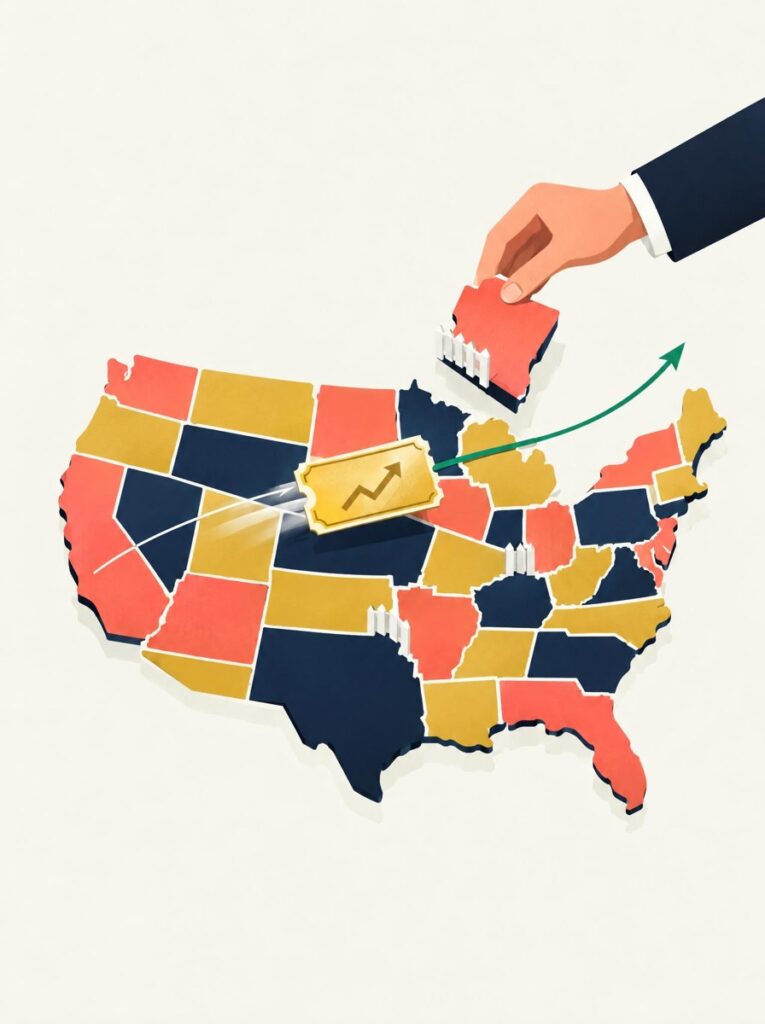
The Commodity Futures Trading Commission on November 5, 2026, told federally regulated exchanges that limiting traders’ access based on which U.S. state they are in is inconsistent with federal law, and gave them 30 days to drop such restrictions or explain why they can’t. The agency set out the position in an interpretation of its rule requiring designated contract markets (DCMs) to provide “competitive, open, fair, and impartial access,” announced in a press release.
“Geographic access restrictions are inconsistent with those purposes and the Act’s impartial access requirements,” Chairman Michael Selig said.
What exchanges have to do
Within 30 days, DCMs must stop domestic geographic restrictions that violate the rule, or send the CFTC’s Division of Market Oversight an explanation of why that is not feasible. In the same window they should make sure intermediaries accessing their markets are not impeding the rule, or explain why that is not feasible. The Commission will consider the facts and circumstances of each case in connection with any action.
The interpretation says the agency is aware that “some DCMs have adopted access criteria that restrict access to certain event contract markets based on prospective traders’ location or residence.” It does not name any exchange. It takes effect when published in the Federal Register.
The agency’s reasoning
The CFTC’s view is that the Commodity Exchange Act and its rules “generally do not permit a DCM to limit access based on the location of an otherwise eligible market participant within the United States.” Access should turn on a trader’s financial and operational soundness, not on where they live.
The document lists the harms it sees in state blocks. A trader who opens a position in one state and travels to a blocked one may be unable to manage it or meet a margin call, which can lead to forced liquidations. Restricting states with large concentrations of high-volume traders, such as market makers, could reduce volume and widen spreads.
Its examples include weather, energy, sports and elections. To the extent a contract draws regional interest, such as whether a home team makes the playoffs, excluding that region could reduce its liquidity. In some statewide and local election markets, residents may supply most of the volume and knowledge, so a block “could severely undercut” a market’s information-discovery role.
What it means
Exchanges that restrict event contracts by state now have a deadline to remove those limits or justify them to the agency. The interpretation sets out the Commission’s reading of the Commodity Exchange Act and its own rules. It does not address state gambling laws or the court cases in which states argue those laws apply to these contracts, including the Second Circuit cases involving Kalshi and Coinbase.
Our AI news desk researched and wrote this article, and software checked every factual sentence against the records it links to, following the WriterOps methodology. Report an error.