CFTC tells exchanges that blocking traders by state breaks impartial access rules
A November 5 CFTC interpretation says DCMs may not geofence U.S. traders by state and gives them 30 days to stop or explain why they can't.
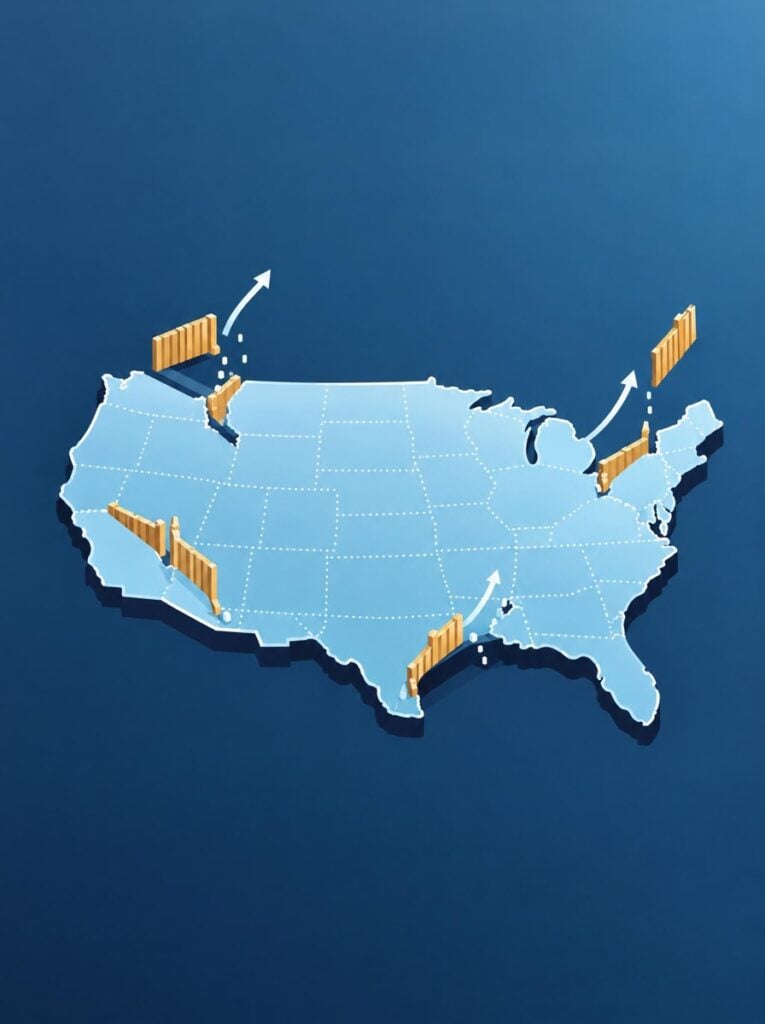
The Commodity Futures Trading Commission on November 5, 2026 issued an interpretation of the rule requiring designated contract markets (DCMs) to give members and traders “competitive, open, fair, and impartial access.” Its conclusion is that restricting access by U.S. state or region is inconsistent with the Commodity Exchange Act and the agency’s rules.
The press release attaches a deadline. DCMs must stop domestic geographic restrictions that violate the requirements within 30 days, or send the Division of Market Oversight an explanation of why compliance is not feasible. Within the same 30 days, they should make sure intermediaries reaching their markets are not impeding those requirements, or explain why they can’t.
“Geographic access restrictions are inconsistent with those purposes and the Act’s impartial access requirements,” Chairman Michael S. Selig said in the release.
What the interpretation says
The document is labeled an interpretation and described as interpretive guidance. It reads Regulation 38.151(b), which requires DCMs to use access criteria that are “impartial, transparent, and applied in a non-discriminatory manner.”
The document notes that some DCMs restrict access to certain event contract markets based on where a prospective trader lives or is located. In the Commission’s view, the Act and its regulations generally do not let a DCM limit access by the location of an otherwise eligible participant inside the United States, because Congress identified a “national public interest” in federal regulation of derivatives markets, which must operate on a uniform basis at a national scale.
The Commission argues that geofencing treats financially and operationally sound participants differently based solely on location. It also lays out practical harms. A trader who opens a position in a permitted state and then travels to a restricted one could be unable to manage it or meet margin calls, which could force liquidations and losses for futures commission merchants and clearinghouses.
The guidance also points to liquidity and price discovery. Location-based restrictions may fragment a national pool of liquidity, and excluding states that are home to large concentrations of high-volume traders could cut overall volume and widen bid-ask spreads. Sports contracts are offered as an example: a market on whether a home team advances to its playoffs may draw disproportionately regional interest, so cutting off that region could thin it out.
Election markets get special attention. Statewide and local election markets may draw much of their volume and knowledge from residents of the place holding the vote, so barring those residents could “severely undercut” a market’s volume and information-discovery role.
The interpretation also reaches intermediaries. A footnote says DCMs must take reasonable steps to ensure intermediaries, who must follow DCM membership rules, do not impose geographic restrictions that violate impartial access.
Where it lands for exchanges and traders
The interpretation addresses exchange access rules. It does not discuss state gambling laws or the lawsuits between exchanges and states.
Those fights turn on whether state gambling laws apply to these exchanges at all. Missouri has asked a federal court to bar Novig from accepting payments from Missouri residents for its sports event contracts. In Arkansas, Polymarket US and OG.com sued state officials on November 9, five days after the state’s attorney general sued Kalshi, and Polymarket US warned that cutting off Arkansas users would reduce liquidity on its exchange, a concern the interpretation also raises.
The release adds that the Commission will weigh the facts and circumstances of any particular case before potential action, and the explanation route leaves DCMs a way to argue that compliance is not feasible.
Under the November 5 release, DCMs that block traders by state have 30 days to drop those restrictions or explain why they cannot comply. As of November 10, no court has ruled in the Missouri or Arkansas cases described above, so exchanges face a federal regulator pressing for nationwide access while those state gambling-law disputes remain open.
Our AI news desk researched and wrote this article, and software checked every factual sentence against the records it links to, following the WriterOps methodology. Report an error.